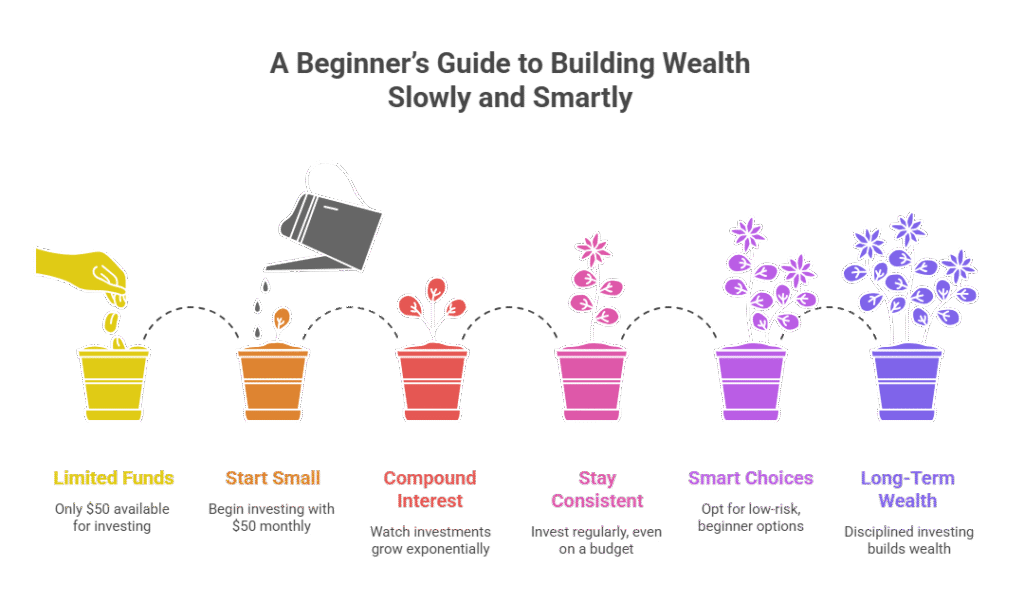
Starting your investing journey can feel overwhelming, especially if you’re working with a tight budget. The good news? You don’t need thousands of dollars to get started. In fact, investing as little as $50 a month can make a meaningful difference over time. By using the power of compound interest, discipline, and smart choices, you can steadily grow your wealth even on a small income. This comprehensive guide will show you exactly how to start investing with $50 a month, step by step, while keeping your risk low and your confidence high.
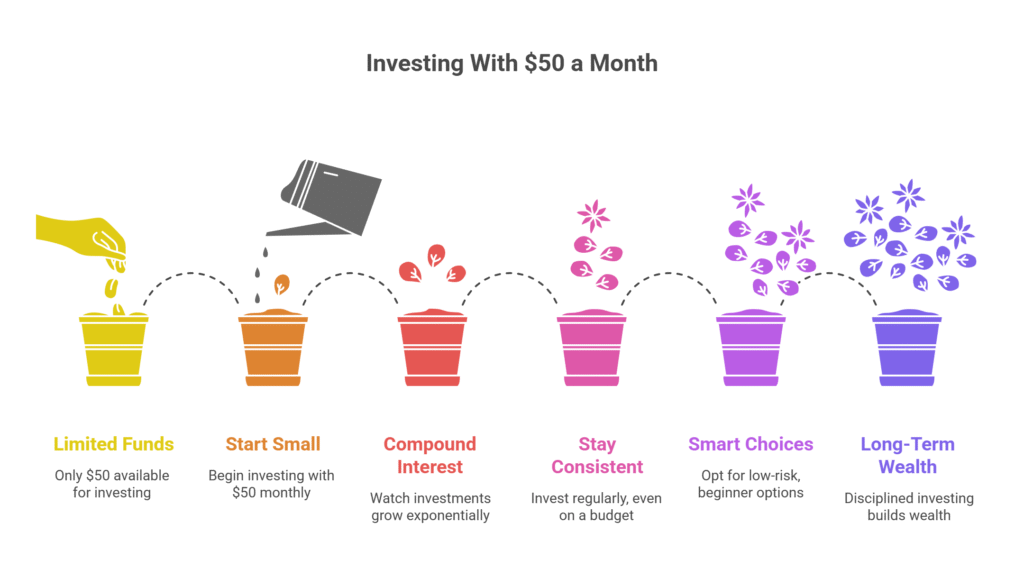
Why Start Small When Investing?
Most people delay investing because they think small contributions aren’t worth it. The truth is, starting small can be one of the most effective ways to build wealth. With consistency, time, and compound interest on your side, even $50 a month can grow into something significant.
The Power of Compound Interest
Compound interest is what makes long-term investing so powerful. It’s when your earnings start earning their own earnings. For example, if you invest $50 per month at an average 7% annual return, you’ll have about $8,600 in 10 years and over $50,000 in 30 years. You’re not just saving money; you’re allowing your money to grow on autopilot.
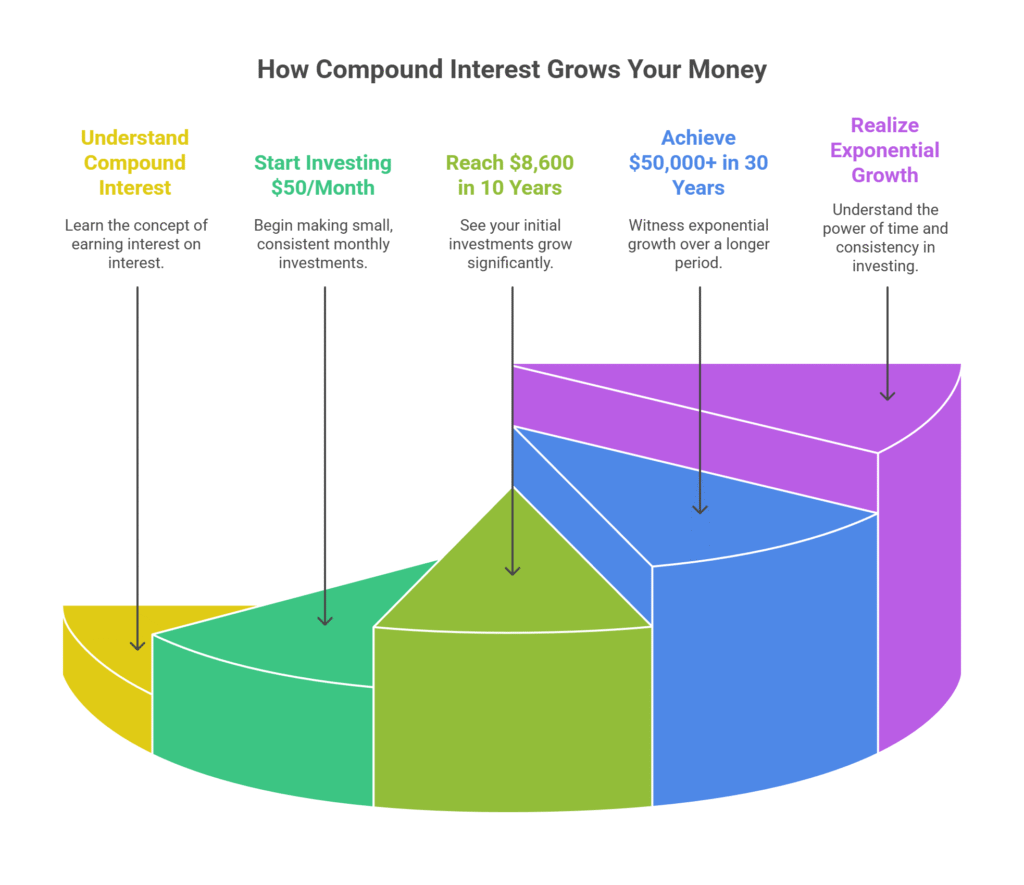
This concept is what separates successful investors from those who never start. Small amounts add up, and time multiplies your results exponentially. The earlier you start, the more you benefit from this snowball effect.
Building Good Financial Habits Early
Investing small amounts helps build good habits; budgeting, saving consistently, and thinking long-term. When you automate a $50 transfer into an investment account each month, you’re not just saving money, you’re building discipline. Over time, increasing that amount will feel natural.
Many successful investors began with tiny amounts. What matters most isn’t how much you start with it’s that you start. As your income grows, you can increase your contributions, but the foundation of consistency is what creates sustainable financial growth.
Best Beginner-Friendly Investment Options
If you’re new to investing, the sheer number of choices can feel intimidating. Luckily, several beginner-friendly options are perfect for small monthly investments. Below are the most practical and accessible ways to invest with limited funds while still maximizing potential growth.
1. Robo-Advisors
Robo-advisors are automated platforms that invest your money based on your goals, time horizon, and risk tolerance. You don’t need to pick stocks or worry about market timing—they handle it for you.
- Ease of use: Simple setup and hands-off management.
- Low starting point: Many allow you to start with as little as $10–$50.
- Diversification: Your money is automatically spread across various assets.
Popular options like Betterment provide professional portfolio management with minimal fees. You can even set up automatic deposits each month to stay consistent.
2. ETFs (Exchange-Traded Funds)
ETFs are an excellent way to invest small amounts because they give you access to a basket of stocks or bonds without needing to buy individual shares. With fractional investing now widely available, you can own parts of top ETFs with just a few dollars.
Some beginner-friendly ETFs to consider:
- Broad market ETFs like S&P 500 trackers
- Bond ETFs for stability
- Dividend ETFs for passive income
ETFs are low-cost, diversified, and transparent. They’re ideal for new investors who want exposure to different sectors without complex management. https://investwisetoday.com/understanding-etfs/
3. Micro-Investing Apps
Micro-investing apps make investing effortless by rounding up your purchases and investing the spare change. Spend $3.50 on coffee, and the app invests $0.50 for you. Over time, these small contributions add up.
Top benefits include:
- Start investing with pocket change
- Automated and beginner-friendly
- Teaches consistency in saving
Apps like Acorns provide simple interfaces and low barriers to entry, helping beginners take their first investing steps without pressure or complexity.
Strategies to Maximize Your Growth
Investing with $50 a month is great but using the right strategies can multiply your results. Let’s explore how to make every dollar count.
1. Automate Your Contributions
One of the biggest mistakes beginners make is relying on willpower to invest. Automation eliminates that problem. Set up an automatic monthly transfer from your checking account to your investment account. This way, your $50 investment happens before you even think about spending it.
Automation also prevents emotional investing buying high and selling low. When you invest regularly, you take advantage of dollar-cost averaging, smoothing out market volatility over time.
2. Diversify Your Portfolio
Diversification spreads risk across different investments. If one asset performs poorly, others can balance it out. With only $50 a month, focus on ETFs or robo-advisors that automatically diversify for you.
Example allocation:
- 60% broad-market ETFs
- 20% bonds or fixed income
- 10% international ETFs
- 10% crypto or emerging sectors (optional)
Over time, rebalancing ensures your portfolio stays aligned with your goals. Many robo-advisors handle this automatically.
3. Reinvest Dividends and Earnings
Reinvesting dividends supercharges compound growth. Instead of cashing out your earnings, use them to buy more shares creating a snowball effect. Most investing platforms let you toggle this feature on automatically.
Example: A $50 monthly investment with dividend reinvestment at a 7% annual return can grow to more than $60,000 over 35 years. Without reinvestment, you’d end up with far less.
Common Beginner Mistakes to Avoid
Even with a small amount like $50 per month, beginners can still make costly mistakes. Awareness is key to avoiding them.
Chasing Hot Stocks
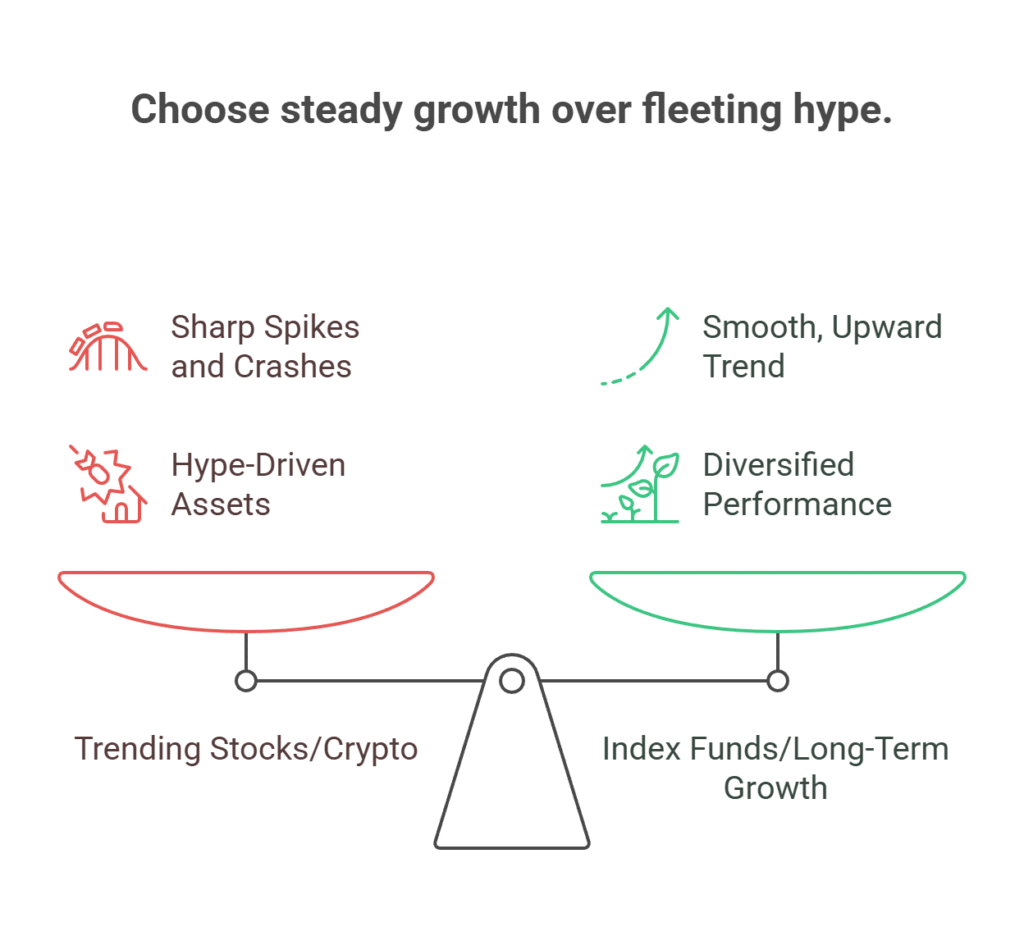
New investors are often tempted by trending stocks or cryptocurrencies. While some may skyrocket temporarily, most drop just as fast. Chasing hype rarely works long-term. Instead, stick to diversified, long-term assets that grow steadily.
Ignoring Fees
Fees can quietly eat away at your returns. Even a 1% annual fee can reduce long-term growth by thousands of dollars. Always check management fees (expense ratios) and prefer low-cost ETFs or robo-advisors with transparent pricing.
Waiting Too Long to Start
The biggest mistake is waiting. Time is your greatest ally in investing. Starting today, even with $50, beats waiting for the “perfect time.” Every month you delay, you lose potential compound growth.
Step-by-Step Plan to Start Investing with $50 a Month
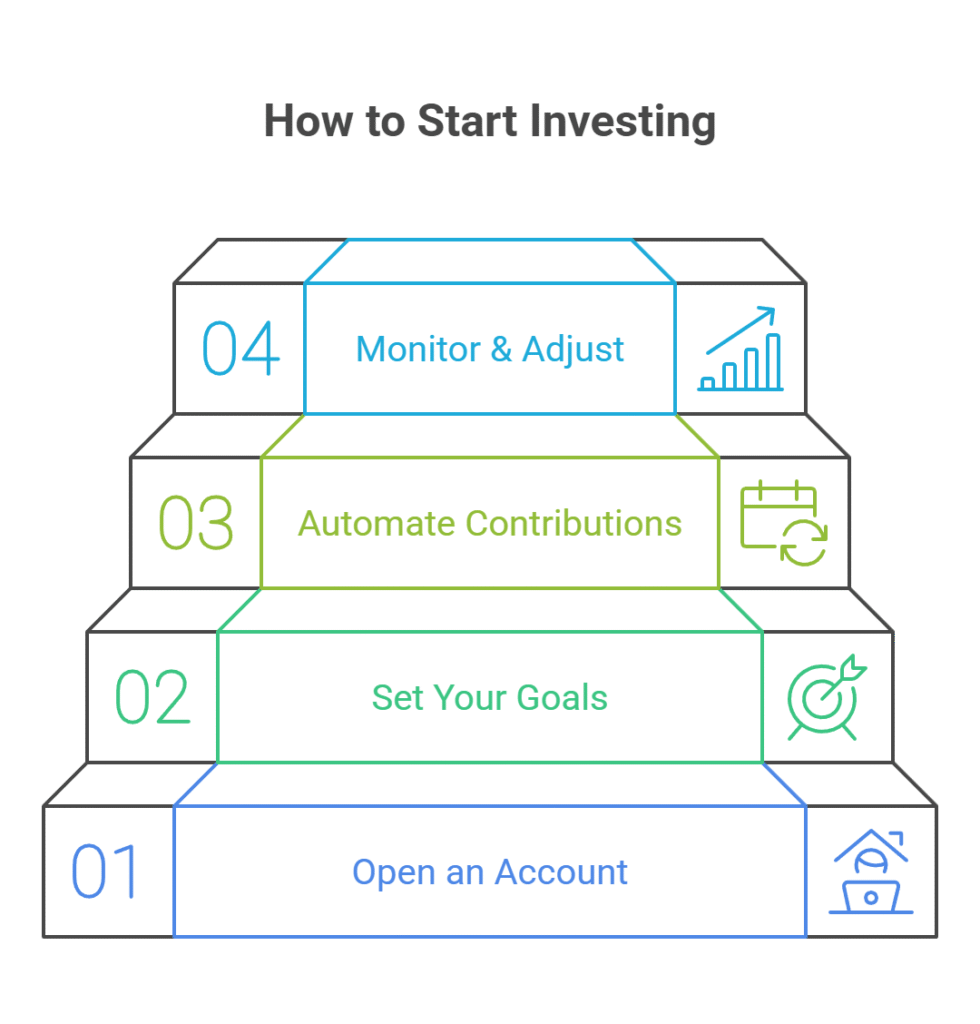
Step 1: Open an Account
Choose a reputable platform such as Fidelity. Many require no minimum deposit and support automatic monthly transfers.
Step 2: Set Your Goals
Define what you’re investing for retirement, emergency savings, or long-term wealth. Clear goals help you pick the right risk level and investment type.
Step 3: Automate Contributions
Set up a recurring transfer for $50 each month. Treat it like a non-negotiable bill to your future self.
Step 4: Monitor and Adjust
Review your investments quarterly. Don’t panic over short-term fluctuations focus on long-term trends. Gradually increase your contributions as your income grows.
Practical Tips for Long-Term Success
- Stay consistent: Even during market downturns, keep investing. Down markets are opportunities to buy at lower prices.
- Educate yourself: Follow blogs like https://investwisetoday.com/beginner-investing-mistakes/ or read beginner guides to improve your understanding of personal finance.
- Increase your contribution: Every raise or bonus is an opportunity to add more.
- Track your net worth: Seeing progress reinforces motivation and long-term discipline.
Mini Case Study: How $50 Grows Over Time
Let’s visualize what happens when you invest $50 a month consistently. Assume a 7% annual return compounded monthly.
| Years | Total Contributions | Estimated Value |
|---|---|---|
| 5 | $3,000 | $3,500 |
| 10 | $6,000 | $8,600 |
| 20 | $12,000 | $24,600 |
| 30 | $18,000 | $57,400 |
Even modest amounts can turn into tens of thousands of dollars through time and discipline. That’s the magic of compound interest in action.
Frequently Asked Questions
1) Can I really grow wealth with only $50 a month?
Yes. The key is consistency and time. With steady contributions and compound interest, even small investments can grow into substantial sums. The sooner you start, the more time your money has to work for you. ([LINK: related-post])
2) What’s the safest investment option for beginners?
Low-cost index ETFs or diversified robo-advisor portfolios are ideal starting points. They offer balance between growth potential and risk management.
3) How do I know which platform to trust?
Look for platforms that are regulated, have transparent fees, and strong security features. [AFFILIATE: InvestingPlatform] is one such example, offering both ease and reliability for new investors.
4) Should I increase my investment later?
Absolutely. As your income grows, aim to increase your monthly contribution from $50 to $100 or more. The earlier you scale up, the faster your returns compound.
5) Can I invest automatically every month?
Yes. Most platforms allow automatic deposits, ensuring you stay consistent without manual effort. Automation is one of the most effective habits you can develop for wealth building.
Takeaways
Investing doesn’t have to be complicated or expensive. Investing with $50 a month is more than enough to build lasting financial momentum. Focus on consistency, diversification, and long-term goals not overnight success. Whether you use robo-advisors, ETFs, or micro-investing apps, the key is to start today and keep going.
Your future self will thank you for every $50 you invested early. Time is your greatest ally in wealth building use it wisely. Begin today, stay patient, and watch your financial confidence grow month by month.