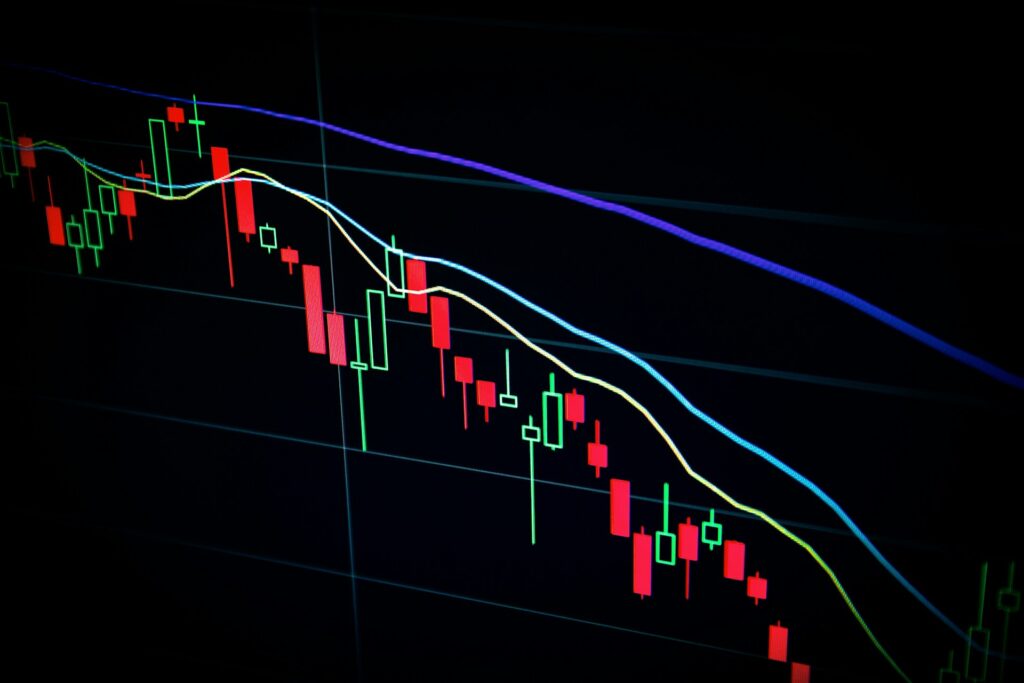
The Crash Is Coming. Now What?
Every investor, at some point, watches their portfolio drop 20%, 30%, even 40% in a market crash. It’s terrifying. It feels like everything is falling apart. And in that moment, most people do exactly the wrong thing.
So let’s be direct: what actually happens to your investments in a crash, what should you do, and what will destroy your financial future if you do it?
What Physically Happens to Your Investments
Stock Values Drop on Paper
When the market crashes, the value of your stocks, ETFs, and mutual funds drops on your screen. But, and this is critical, you haven’t actually lost anything until you sell. These are unrealized losses, meaning they exist only on paper.
If you bought 100 shares of an S&P 500 index fund at $400 and it drops to $280, you’re down $12,000 on paper. But you still own those 100 shares. The moment the market recovers (and historically, it always has), your shares recover in value too.
Dividend Payments May Change
Some companies cut or suspend dividends during crashes to preserve cash. If you rely on dividend income, expect some disruption. However, diversified index funds typically maintain dividend payments, though at reduced amounts.
Bond Values Often Rise
During stock market crashes, investors often flee to the safety of bonds, which pushes bond prices up. This is why holding a mix of stocks and bonds in your portfolio provides a cushion during downturns, bonds partially offset stock losses.
What the Historical Data Tells Us
Every major market crash in history has eventually recovered:
- The 2008-2009 financial crisis: S&P 500 dropped ~57%. Recovered within 5 years.
- The 2020 COVID crash: S&P 500 dropped ~34% in 5 weeks. Recovered within 6 months.
- The dot-com crash of 2000-2002: took longer, about 7 years to fully recover.
The pattern is consistent: markets crash, then recover, then reach new highs. Every single time in modern US market history. The question isn’t whether markets recover, it’s whether you’ll still be invested when they do.
The 4 Things Most People Do Wrong in a Crash
1. Panic Selling
Selling during a crash locks in your losses permanently. You turn a temporary paper loss into a real, permanent one. Then when the market recovers, which it will, you’ve missed the rebound and have to buy back at higher prices. This is the single most wealth-destroying behavior in investing.
2. Waiting for ‘the Bottom’
Nobody knows exactly when a crash bottoms out. Trying to time it perfectly is near impossible. Investors who wait for ‘the perfect moment’ often miss the recovery entirely. The best time to buy more is when prices are low, even if they might go lower.
3. Checking Their Portfolio Constantly
Obsessively watching your portfolio during a crash increases anxiety and the likelihood of making emotional decisions. Check it less. Seriously. Daily portfolio checking during a crash serves no purpose except stress.
4. Moving Everything to Cash
Moving to cash feels safe but kills your recovery. Inflation erodes the value of cash, and you’ll be sitting on the sidelines while the market rebounds. This is often called the ‘return-free risk’ of holding cash during volatile periods.
What You Should Actually Do
- Keep contributing: If you’re dollar-cost averaging (investing a fixed amount regularly), keep going. You’re buying more shares at lower prices.
- Rebalance if necessary: If your allocation has drifted significantly, rebalance, but don’t over-trade.
- Check your emergency fund: Make sure you have 3-6 months of expenses in cash outside your investment accounts. This prevents you from being forced to sell investments at the worst time.
- Consider buying more: If you have extra cash available and a long time horizon, a crash can be an opportunity, not a disaster.
- Nothing, if your plan is solid: For most long-term investors, the right move during a crash is to do absolutely nothing and let the market do what it always does.
How to Protect Yourself Before the Next Crash
The best time to prepare for a crash is before it happens:
- Maintain a proper asset allocation based on your risk tolerance and time horizon
- Build and maintain an emergency fund so you never have to sell investments for living expenses
- Avoid investing money you’ll need within 2-3 years in the stock market
- Understand that volatility is the price you pay for long-term returns
FAQ SCHEMA
Q: Should I sell my stocks before a market crash?
A: No. Timing the market is nearly impossible even for professionals. Selling before a crash and missing the recovery is one of the most common ways investors destroy long-term returns.
Q: How long does it take to recover from a stock market crash?
A: It varies. The 2020 COVID crash recovered in about 6 months. The 2008 financial crisis took about 5 years. The dot-com crash took up to 7 years for some sectors. Historically, staying invested has always rewarded patient investors.
Q: Is my money safe in a crash if I use an index fund?
A: Index funds drop in value during crashes just like individual stocks. However, they’re diversified across hundreds or thousands of companies, reducing the risk that any single company’s failure destroys your portfolio.
Q: What should I do with cash during a market crash?
A: If you have long-term investment money, a crash is an opportunity to invest at lower prices. Keep your emergency fund in cash, but consider putting extra savings to work while prices are down.