
If hearing the word “investing” makes you think of fast-talking stock traders on Wall Street or complicated graphs you don’t understand, you’re not alone. Most people grow up learning how to earn and spend money, but very few learn how to make their money work for them. The good news? You don’t need a finance degree, thousands of euros, or insider knowledge. With the right strategy, anyone can begin investing, even starting with €10, €25, or €100 per month.
This guide breaks everything down into simple, practical steps. You’ll learn how to prepare financially, where to invest, how to choose your strategy, and how to avoid common mistakes. Whether you’re a complete beginner or someone who’s been curious about investing for years but didn’t know where to start, this guide gives you everything you need to take the first step with confidence.
Throughout the article, we will explore essential principles, beginner-friendly asset types such as ETFs and index funds, risk management strategies, tools that simplify investing, and tips backed by decades of market data. You’ll also find real-world examples, scenarios, and advice to help you make informed decisions. No hype, just honest education and a clear path forward.
Let’s begin your journey toward financial independence.
Why Investing Matters Even if You Can Only Start Small
Many people delay investing because they believe they need a large income or a pile of cash to get started. But the truth is: time matters more than money. Even investing small amounts early gives you a powerful advantage, because it gives your money time to grow through compound interest.
While simply saving money is responsible, it comes with a hidden problem: inflation. Inflation slowly reduces how much your money can buy. If prices rise 3–5% every year but your savings account only earns 0–1%, your purchasing power shrinks. Investing helps your money grow faster than inflation so that your wealth increases over time rather than slipping away silently.
Understanding Inflation
Inflation is the gradual rise in prices. A loaf of bread or a liter of fuel today costs more than it did ten years ago. The same €100 in a traditional savings account will buy less in the future. Historically, inflation averages around 2–4% annually in developed countries, though recent years have seen higher spikes.
Investing shields you against this loss. When you invest, your money works to generate a return, ideally higher than inflation, which ensures your purchasing power increases over time.
The Power of Compound Growth
Compound interest is when your earnings generate more earnings. Think of it like a snowball rolling downhill. The longer it rolls, the larger it gets.
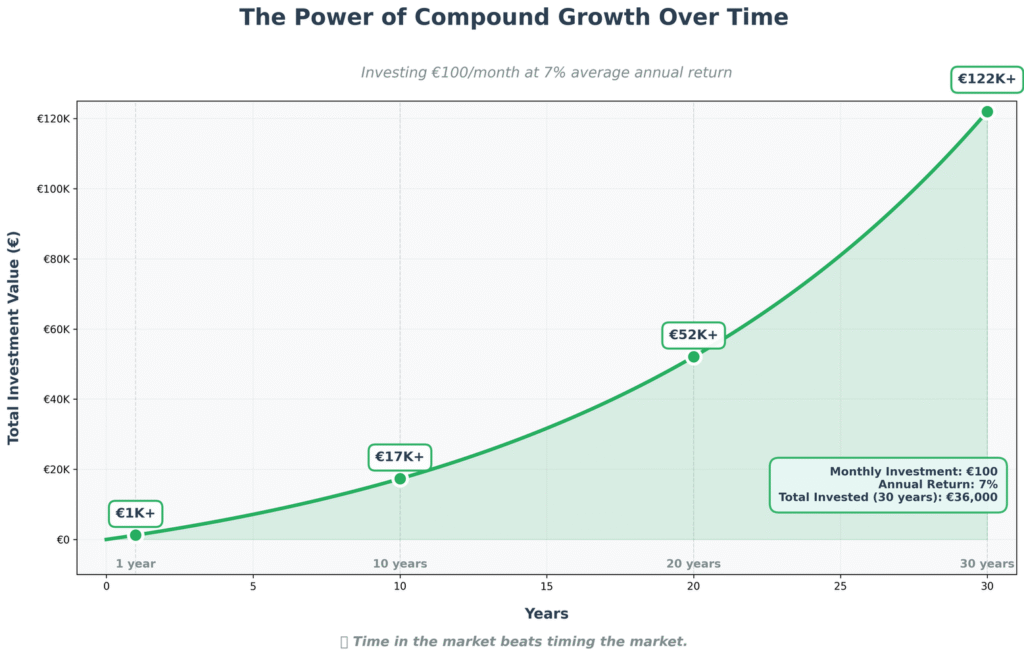
If you invest €100/month at a 7% average annual return, here’s what happens:
- After 1 year: ~€1,240
- After 10 years: ~€24,000+
- After 20 years: ~€51,000+
- After 30 years: ~€113,000+
The longer you keep investing, the more dramatic the compounding effect becomes. Time in the market beats timing the market.
Even if you can only invest small amounts now, starting early is the single most valuable thing you can do.
Step 1: Build a Strong Financial Foundation
Before you make your first investment, it’s essential to lay a stable financial foundation. Think of investing like building a house: you need a strong base before constructing anything above it.
Create an Emergency Fund
An emergency fund is a savings buffer for unexpected expenses, medical bills, job loss, car repairs, etc. Without it, you might be forced to sell investments during market downturns, potentially locking in losses.
How Much Should You Save?
A good rule of thumb is to save at least:
- 3–6 months of essential living expenses if you have a stable income
- 6–12 months if your income fluctuates or you are self-employed
This safety net protects you so you can invest confidently without worrying about short-term volatility.
Pay Off High-Interest Debt
It rarely makes sense to invest while carrying high-interest debt (e.g., credit cards charging 10–20% interest). Paying these off provides a guaranteed return equal to the interest you would have paid.
If your debt interest is:
- More than 7–8%: Pay it off first before investing.
- Lower than 7–8%: You may pay it down while investing simultaneously.
Once your emergency fund is set and high-interest debt is under control, you’re ready to invest.
Step 2. Learn the Basic Types of Investments
There are many ways to invest, but understanding the core categories helps you build a balanced portfolio tailored to your goals and risk tolerance. Here are the main asset classes beginners should understand.
- Stocks: Shares of ownership in a company.
- Bonds: Loans to companies or governments, paying interest.
- ETFs and Index Funds: Bundles of stocks/bonds for broad diversification.
- Real Estate: Property that generates rental income and/or appreciation.
Stocks (Equities)
When you buy a stock, you’re purchasing a piece of a company. If the company grows, your investment may increase. Some companies also pay dividends. Stocks typically offer higher long-term returns but come with higher short-term volatility.
Bonds
Bonds are loans you give to companies or governments. In return, they promise to repay you with interest. They’re generally considered lower-risk than stocks, but they also deliver lower returns.
ETFs & Index Funds
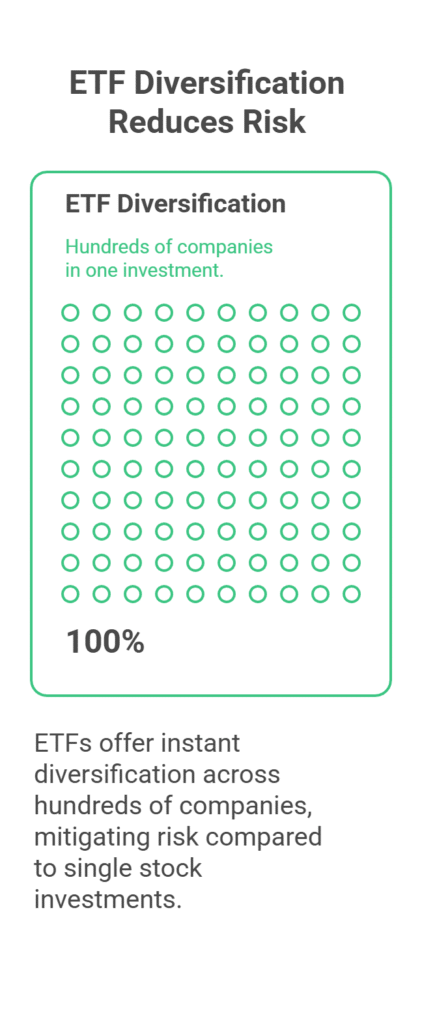
Exchange-Traded Funds (ETFs) and index funds are bundles containing dozens or hundreds of different stocks or bonds. This diversification lowers your risk. Rather than betting on a single company, you spread your investment across many.
For example, an S&P 500 index fund contains shares of the 500 largest U.S. companies. If some companies fall, others rise, keeping performance stable over time.
Why beginners love ETFs/index funds:
- Low cost
- Instant diversification
- Low maintenance
- Solid long-term returns
Historically, broad index funds have returned around 7–10% annually.
Real Estate
Real estate investing involves buying property to earn rental income or profit from future appreciation. It can be a reliable income source, but requires upfront capital, maintenance, and risk management.
Which Should Beginners Choose?
Most beginners benefit from starting with broad, low-cost ETFs or index funds. They provide a simple entry point, reducing risk while delivering steady long-term returns.
Step 3: Choose a Beginner-Friendly Investment Platform
Once you understand what you want to invest in, it’s time to choose a platform. Today, there are many brokerage accounts and investing apps that allow beginners to start easily, even with small amounts.
What to Look For
- Low or zero fees : Fees can eat into returns over time.
- User-friendly design: Clean, intuitive dashboards help you make better decisions.
- Access to ETFs/index funds: Essential for diversification.
- Automated deposits: Helps you stay consistent.
- Fractional shares: Lets you buy small pieces of expensive stocks.
Examples include:
- [affiliate:InvestingPlatform]
- [affiliate:BrokerApp]
- [LINK: related-post]
Most platforms allow beginners to start with €10–€50, making investing accessible to nearly everyone.
Step 4: Understand and Choose Your Risk Tolerance
Investing always involves risk. Your risk tolerance is your emotional and financial ability to handle market ups and downs. Some people can sleep peacefully even if markets fall 20% temporarily. Others panic. Understanding yourself is crucial because emotions not logic are the main reason people lose money.
How to Measure Your Risk Tolerance
Ask yourself:
- How would I feel if my investments declined 20% next month?
- Am I willing to wait 5, 10, 20+ years for returns?
- Do I have a stable income?
- Do I panic easily under stress?
The more time you have until you need the money, the more risk you can take. Young investors can often hold more stocks and fewer bonds, while older investors may prefer a more conservative balance.
Rule of Thumb
A simple rule for asset allocation:
100 – your age = percentage of your portfolio in stocks
Example:
- Age 30 → 70% stocks, 30% bonds
- Age 50 → 50% stocks, 50% bonds
This isn’t perfect for everyone, but it’s a useful starting point.
Step 5: Automate Your Investing & Stay Consistent
Automation is one of the most powerful investing tools available. When you automate monthly contributions, you remove the emotional pressure of deciding when to buy and turn investing into a habit.
This strategy is called dollar-cost averaging (DCA). You invest a fixed amount each month, regardless of whether prices are high or low. Over time, this smooths your purchase price and helps you build wealth steadily.
Why Automation Works
- Reduces emotional decisions
- Ensures consistent investing
- Eliminates market-timing mistakes
- Builds long-term wealth passively
Most beginner platforms allow you to set up recurring deposits and automatic ETF purchases, making investing almost effortless.
Step 6: Avoid Common Beginner Mistakes
The biggest losses in investing usually come from emotional decisions, not lack of knowledge. Learn from the mistakes others have made so you don’t repeat them.
Top Mistakes to Avoid
- Chasing trendy “hot” stocks without research
- Selling during market downturns
- Investing money you’ll need within 1–2 years
- Trying to time the market
- Putting all your money in a single stock
- Not understanding what you’re buying
The most successful investors follow a simple path: diversify, invest consistently, and stay patient.
Example: Emotional Investing
Imagine you invest €1,000 in a broad ETF. A few months later, a recession hits and your investment falls to €850. If you panic and sell, you lock in a €150 loss. But historically, markets have always recovered and continued rising afterward.
Remember: downturns are temporary, growth is long-term.
Beginner Investment Strategies That Work
1. Start Simple with Broad ETFs
A low-cost index ETF tracking major markets (e.g., S&P 500) gives you instant diversification across 500 companies. It requires zero stock-picking knowledge and historically delivers strong returns.
2. Pay Yourself First
Automate monthly deposits. Treat investing as a non-negotiable monthly bill.
3. Stay the Course
Don’t let short-term volatility panic you. Stay invested through ups and downs.
Developing a Long-Term Mindset
Successful investing is not about getting rich quickly. It is about steady, disciplined growth over time. If you stay focused for decades rather than months, you dramatically increase your chance of success.
Market fluctuations are normal. Economic recessions happen. But over every long period in history, diversified portfolios have grown substantially.
Important Long-Term Principles
- Focus on long-term performance not day-to-day noise
- Stick to your plan even when the market drops
- Avoid emotional buying and selling
- Increase contributions as your income grows
Patience + consistency = wealth.
Frequently Asked Questions
1) How much money do I need to start investing?
You can start with just €10–€50 depending on the platform. What matters most is consistency not starting amount.
2) Is investing risky?
Yes, all investments carry risk. But following a diversified, long-term strategy reduces risk dramatically. Historically, diversified portfolios grow over time despite short-term volatility.
3) Should I invest while paying off debt?
If your debt interest rate is above ~7–8%, pay it off first. If it’s lower, you can balance investing and debt repayment simultaneously.
4) How long should I invest?
Ideally, at least 5–10 years. The longer you stay invested, the more benefits you gain from compound growth.
5) What are the safest investments?
No investment is 100% safe, but broad index funds and high-quality bonds are considered relatively low-risk options.
Conclusion. Start Small, Stay Consistent, Think Long Term
You don’t need to be wealthy to begin investing. Investing is how you become wealthy. The earlier you start, the more time your money has to grow. Even small monthly contributions compounded over years can lead to life-changing results.
Focus on:
- Building a financial foundation
- Investing consistently
- Choosing broad ETFs/index funds
- Staying diversified
- Thinking long-term
No one can predict the markets in the short term, but history shows that long-term investors using simple, diversified strategies have been consistently rewarded.
Take the first step today. Your future self will thank you.
👉 Ready to begin?
Start by opening your first investment account and setting up a small monthly deposit. In 10–20 years, you’ll be amazed how far you’ve come.