Experian credit score is one of the most important numbers in your financial life. It influences the credit cards you’re approved for, the interest you’ll pay on loans, your insurance rates, and even rental applications. The good news? You don’t need to be a finance expert to understand it, check it, or improve it. In this deep-dive guide, you’ll learn what your score really measures, how to get your free credit score report without hurting your rating, and the exact steps to raise your score in weeks and months, not years. Keep this playbook handy as your go-to resource for smarter credit decisions.
What the Experian Credit Score Is and Why It Matters
Your Experian credit score is a three-digit summary of your creditworthiness derived from the data in your Experian credit file. Lenders use it to estimate the likelihood that you’ll repay on time. While there are multiple scoring models in circulation, your Experian credit score is typically calculated using either FICO or VantageScore models based on information Experian has about your credit accounts, payment history, balances, and activity. Think of it as a quick, standardized way for banks, credit card issuers, auto lenders, and mortgage companies to assess risk in seconds.
Typical Score Ranges (Illustrative)
- Excellent: 800–850, elite approval odds and lowest rates.
- Very Good: 740–799, strong approvals and competitive APRs.
- Good: 670–739, likely approvals with average rates.
- Fair: 580–669, approvals possible but terms may be costly.
- Poor: 300–579, limited options; focus on rebuilding strategy.
Scores alone don’t tell the entire story. Lenders often apply internal criteria, like income, debt-to-income ratio, and employment stability, on top of your score. Still, your Experian score is the fastest lever you can pull to improve loan terms. A jump from “Fair” to “Good” can mean thousands saved over the life of a mortgage or auto loan. If your goal is cheaper borrowing and faster approvals, mastering the Experian credit score is step one.
Pro tip: Different lenders may pull different bureaus. Even if a bank looks at TransUnion or Equifax, improving the behaviors that raise your Experian score will also lift your overall credit profile. That’s the compound benefit of good credit habits.
How Credit Scores Are Calculated and What Factors Drive Your Number
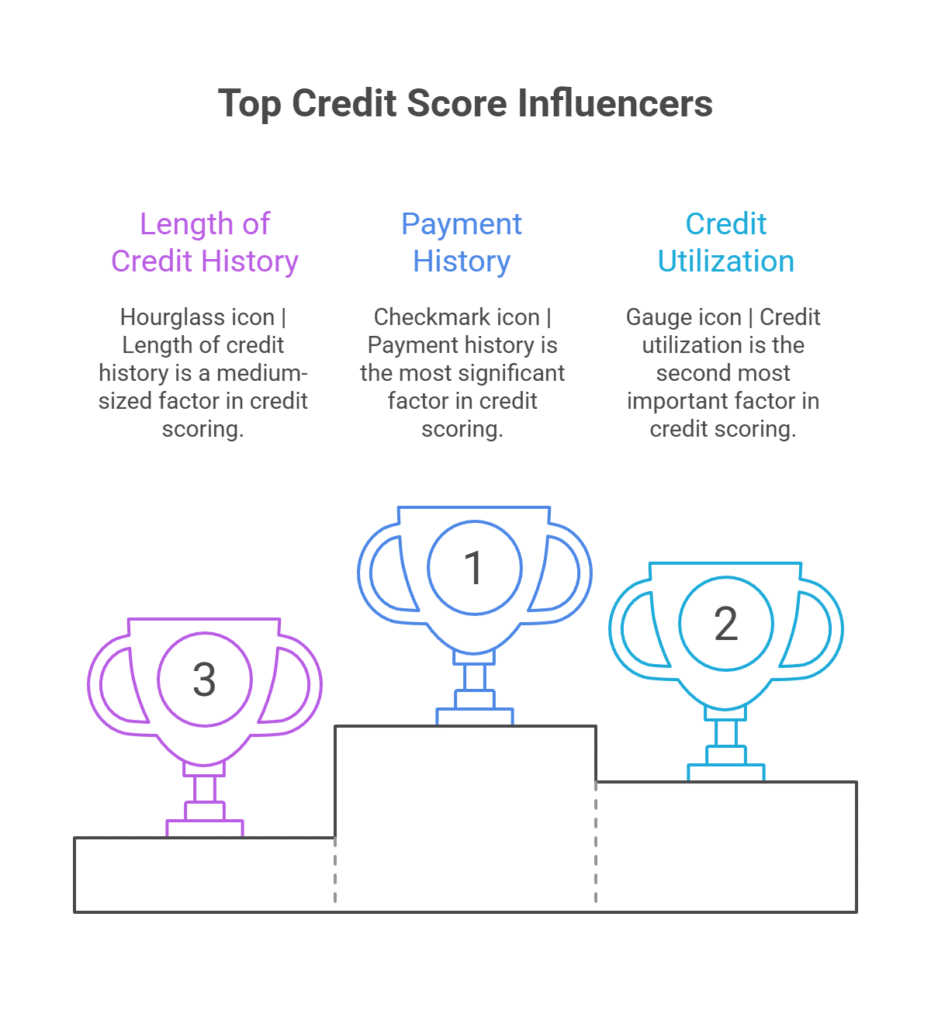
Understanding the inputs behind your score turns a mysterious number into a checklist you can actively manage. While exact weights vary by scoring model, the big drivers are consistent across FICO and VantageScore. Use the breakdown below as your blueprint.
1) Payment History (Largest Weight)
On-time payments are the single most powerful predictor of a healthy score. One 30-day late payment can impact your score for months, and serious delinquencies (60/90 days late, collections, charge-offs) have even longer shadows. Set up autopay for at least the minimum on every account to eliminate accidental late payments. If you do slip, get current quickly; the impact fades with time and positive history.
2) Credit Utilization (Balances vs. Limits)
Utilization measures how much of your revolving credit (credit cards/lines) you’re using relative to your total limits. Lower is better. A general target is <30% overall and <10% for optimal scoring, both at the total and per-card level. Two fast fixes: request higher limits (without increasing spending) and pay down balances before the statement closing date so the reported balance is lower.
3) Length of Credit History (Average Age)
Older accounts provide more data and stability. Closing old cards can shorten your average age and potentially ding your score. If there’s a $0-fee card you seldom use, keep it open and put a small subscription on it to maintain activity.
4) Credit Mix (Types of Credit)
Scoring models reward a healthy blend of revolving (credit cards) and installment accounts (auto loan, student loan, mortgage). Don’t open accounts just for “mix,” but if you naturally need an installment loan, responsible repayment diversifies your profile.
5) New Credit/Hard Inquiries
Each hard inquiry can shave a few points off your score for up to 12 months with diminishing effect. Rate-shopping windows for auto or mortgage loans are usually treated as one inquiry if grouped within a short period. For credit cards, apply strategically, quality over quantity.
Data note: Credit scoring methodologies are standardized but evolve over time. For methodology summaries, see https://www.experian.com/consumer-information/credit-education and https://www.consumerfinance.gov/consumer-tools/credit-reports-and-scores/ for consumer education resources.
How to Get Your Experian Credit Score Free Without Hurting Your Score
You can check your Experian credit score free through reputable platforms using a soft inquiry. Soft checks do not impact your score. Avoid paid trials that require a card unless you truly want premium monitoring features. The steps below keep it simple, secure, and most importantly, free.
Step-by-Step: Get Credit Score Online
- Choose a trusted provider: Start with Experian’s own portal or widely known financial platforms. Look for clear “soft pull” language.
- Verify your identity: Expect security questions about past addresses, loans, or limits. This prevents fraud and protects your data.
- Access your dashboard: You’ll typically see your Experian credit score, recent changes, and key factors helping or hurting your score.
- Enable alerts: Free alerts can help you catch new accounts, big balance jumps, or suspicious activity early.
- Recheck monthly: Scores update regularly (timing varies by data furnishers). A monthly check helps you measure progress.
Best practice: Pair your free score with at least one full free Experian credit report review annually (more on that next). The report shows the underlying trade lines, balances, limits, and payment history that drive your number. Fixing any inaccuracies can produce a fast score boost.
Understanding the Difference Between a Free Credit Score and a Free Experian Credit Report
People often use “credit score” and “credit report” interchangeably, but they’re different tools for different jobs. Your score is a summary number. Your report is a detailed ledger of accounts and history. To manage your credit like a pro, you need both.
Credit Score (Quick Health Check)
- Three-digit number summarizing risk.
- Useful for monitoring trends and approval odds.
- Available free via soft pulls on many platforms.
Credit Report (Full Medical Chart)
- Detailed list of accounts, payment history, credit limits, balances, and inquiries.
- Shows negative items (late payments, collections, public records) if any.
- Use it to dispute errors and validate data.
How to get a free Experian credit report: In many regions, consumers can obtain one free report from each bureau per year. In the U.S., visit the centralized portal to request Experian, Equifax, and TransUnion reports: https://www.annualcreditreport.com. Outside the U.S., consult your national credit reporting framework or consumer protection authority.
Why both matter: If your score suddenly drops, only a full report reveals the “why.” If your report is clean but your score lags, focus on utilization and aging. Use each tool for what it’s best at: the score to track progress, the report to find root causes.
How Often Experian Updates Your Score and What Changes Affect It
Experian updates as new data arrives from lenders and card issuers, typically every 30 days, though timing varies. Some changes hit faster (e.g., a balance update after a statement closes), while others (like a resolved collection) can take a cycle or two to fully reflect.
Events That Can Move Your Score Quickly
- Statement-date balances: Paying down a card before the statement closes reduces the reported balance and can lower utilization immediately.
- New inquiries/accounts: Expect a small, temporary dip from a hard pull; a new account can also shorten average age.
- Late payment reporting: A 30-day late is a notable negative; get current fast to stop the bleeding.
- Credit limit increases: Higher limits (with unchanged balances) lower utilization, often boosting your score.
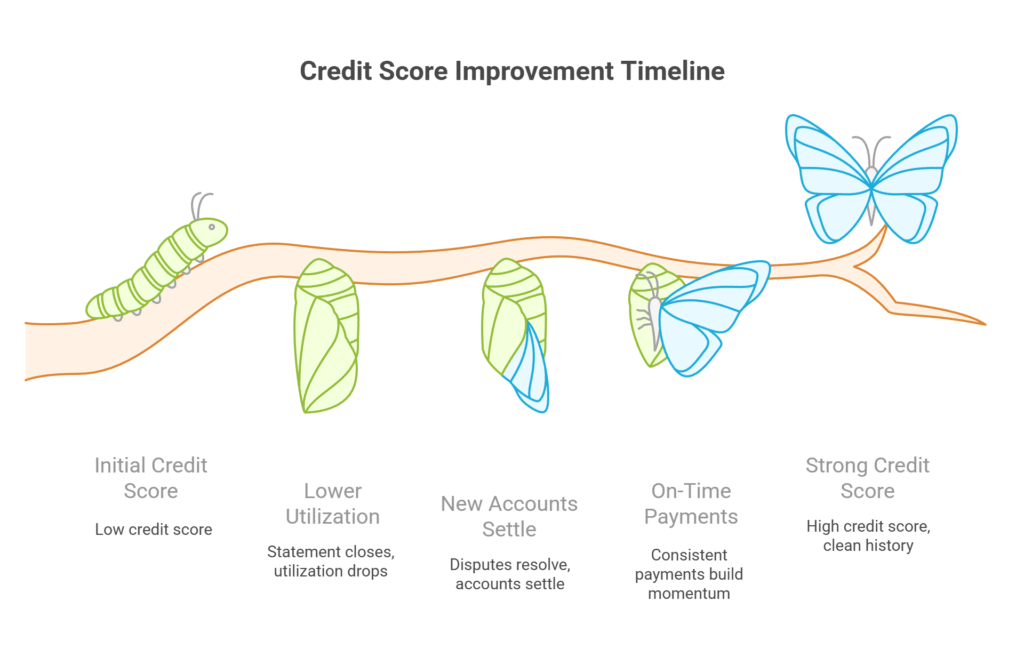
Timeline Expectations
- 1–2 weeks: Utilization tweaks after statement close can nudge scores.
- 1–2 months: New accounts settle; disputes may resolve; alerts stabilize.
- 3–6 months: Consistent on-time payments compound; modest gains accrue.
- 12+ months: Aging and clean history create stronger, more durable improvements.
Data safety tip: If you see an account you don’t recognize, take action immediately. Freeze your credit, file an identity theft report if appropriate, and dispute the item with documentation.
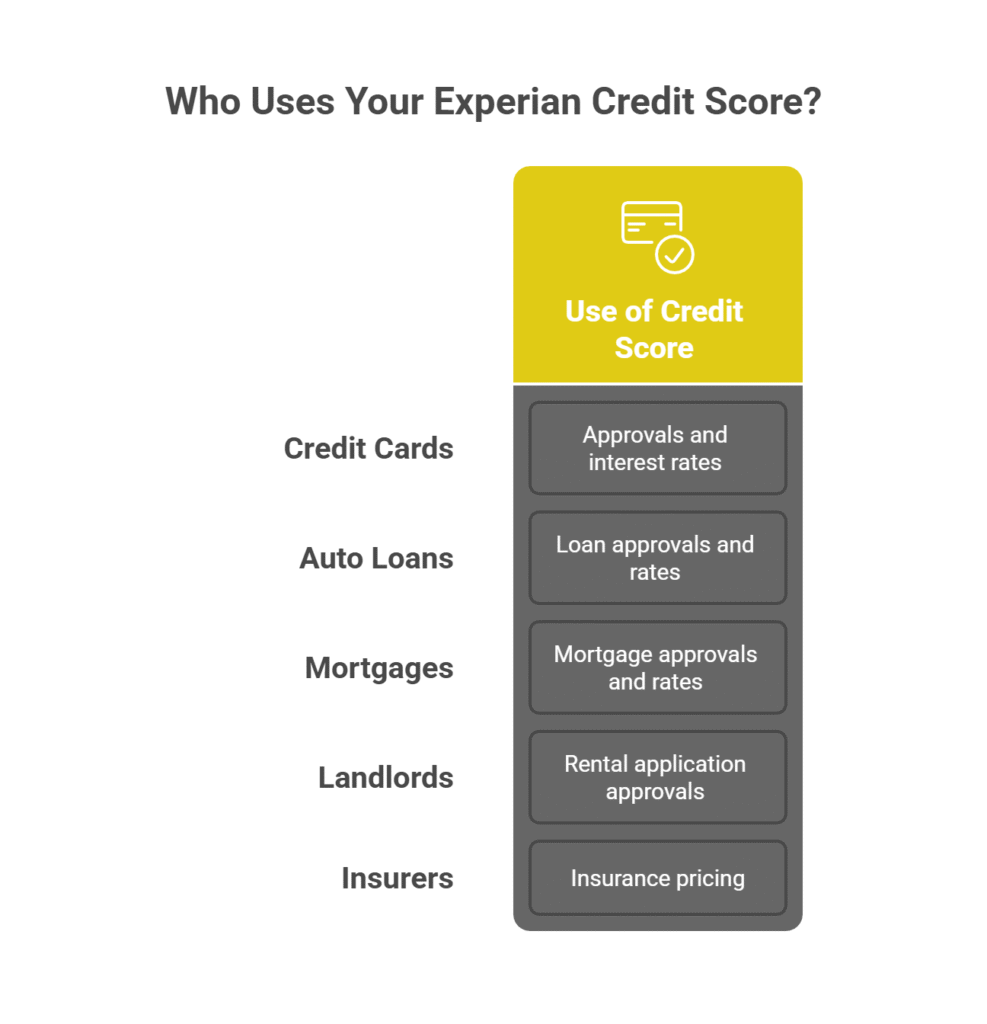
How Lenders Use Your Score for Credit Cards, Loans, and Approvals
Most lenders start with a bureau score (often Experian) to pre-screen applications. But approvals are not one-dimensional. Income, existing debt, loan purpose, and internal risk models play major roles. Knowing common thresholds helps you plan smarter applications and avoid avoidable hard pulls.
Typical Credit Card Approval Bands (Illustrative)
- Excellent (≥ 740–760): Premium rewards cards, 0% intro APR offers, and top sign-up bonuses more likely.
- Good (670–739): Mainstream cashback and travel cards with reasonable APRs.
- Fair (580–669): Starter, secured, or subprime cards; build for 6–12 months before upgrading.
Loans and Your Score
- Auto loans: Better scores mean lower APR; an extra 0.5–2.0 percentage points difference compounds across 36–72 months.
- Personal loans: Lenders scrutinize income and debt-to-income ratio; scores drive both approval odds and advertised rate tiers.
- Mortgages: Rate sheets often price in bands (e.g., 620/660/700/740+). Moving from 719 to 740 can meaningfully improve your interest rate and total interest paid.
Apply strategically. If you’re hovering near a band (e.g., 735–739), a quick utilization reduction or limit increase could tip you into the next pricing tier. Check your Experian credit score free first, then apply once your profile is optimized.
A 30, 60, and 90 Day Action Plan to Improve Your Experian Credit Score Fast
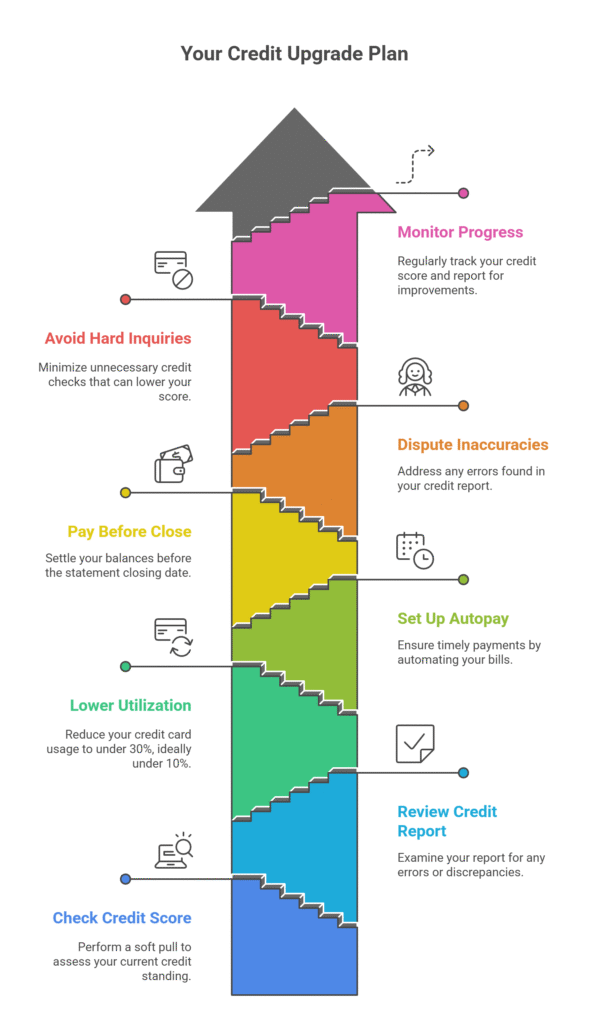
If you want measurable progress, work a time-boxed plan. The steps below prioritize the biggest score levers first, building durable habits as you go. Adapt the checklist to your situation and repeat the cycle quarterly to keep momentum.
Days 1 to 30. Stabilize and Lower Utilization
- Pull a free Experian credit report: Confirm accuracy; note balances, limits, and any negatives. https://www.annualcreditreport.com
- Set autopay for minimums: Late payments are non-negotiable. Autopay prevents accidents.
- Pre-statement payoff: Pay card balances to under 30% (ideally <10%) utilization before the statement date.
- Request limit increases: Use issuer portals to request modest CLI without hard pulls when possible.
- Address errors: Dispute any inaccuracies with documentation; correct data often yields quick gains.
Days 31 to 60. Build Positive Momentum
- Add on-time history: Keep all accounts current. Consider a small recurring bill on a seldom-used $0-fee card to maintain activity.
- Consider a secured card or credit-builder loan: For thin files, these tools add mix and payment history.
- Snowball balances: Focus extra payments on the card with the highest utilization first.
- Automate savings: Building a small cash buffer prevents emergency card usage that spikes utilization.
Days 61 to 90. Optimize and Prepare to Apply
- Re-run your (free) score check: Measure progress and identify remaining weak spots.
- Refine utilization: Keep each card under 10% in the month before key applications.
- Time applications: Batch necessary hard inquiries (e.g., auto/mortgage rate shopping) within allowed windows.
- Compare offers: Use reputable credit card comparison sites to filter by approval odds and APR bands. [LINK: Best Credit Card Comparison Sites for 2025]
Mini case study:
A borrower with a 662 score reduced per-card utilization below 10 percent, set autopay, and corrected a misreported late payment. In 60 days, the score reached 702, enough to qualify for a lower-APR consolidation loan that saved about HRK 200 per month in interest.
Common Credit Myths and Mistakes and the Truth Behind Them
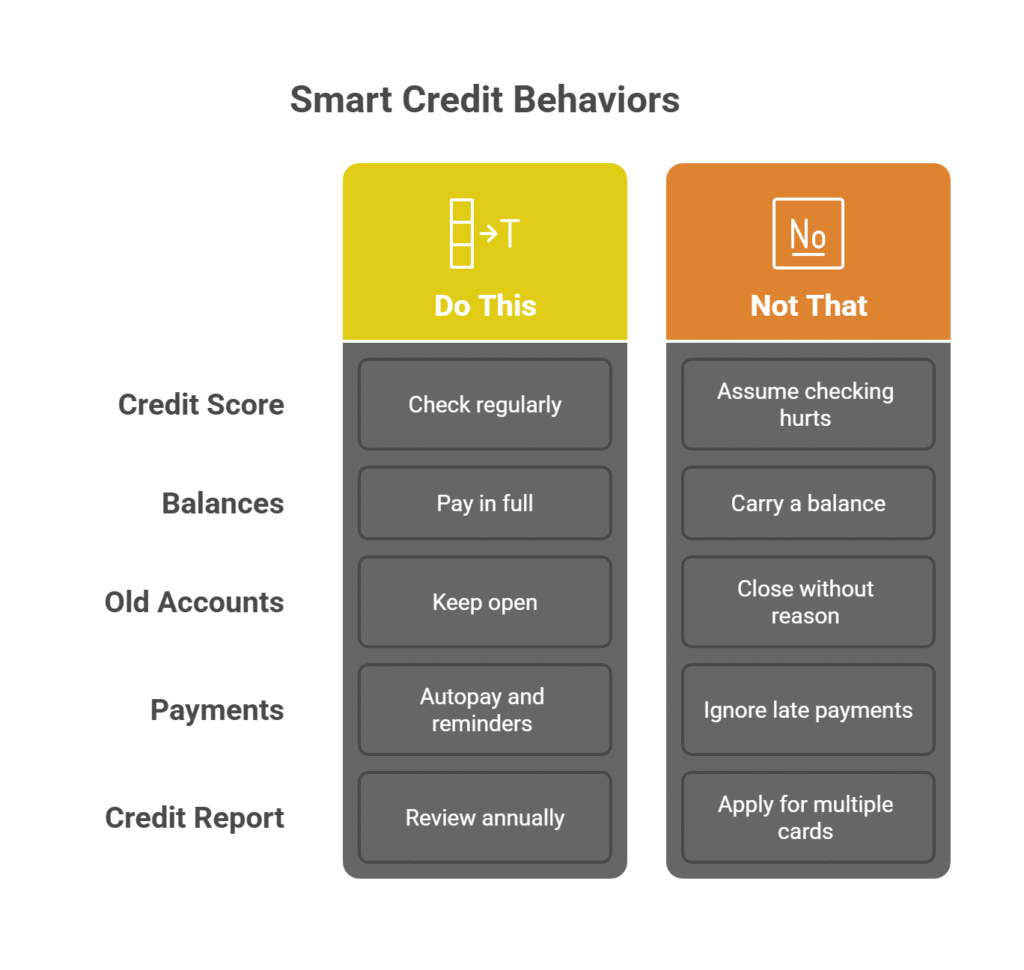
Myth #1: Checking your own score hurts it
False. Pulling your score through legitimate services uses a soft inquiry and does not affect your rating. Checking regularly is a healthy habit.
Myth #2: Carrying a balance helps your score
False. You don’t need to pay interest to look “responsible.” Reported balances matter for utilization, but you can pay in full and still show normal activity.
Myth #3: Closing cards boosts your score
Generally false. Closing old, fee-free cards can reduce average age and remove available credit, potentially increasing utilization. Keep good, free accounts open.
Myth #4: One late payment won’t matter
False. A 30-day late can drop your score sharply, especially on a thin file. Prevent lates with autopay and payment reminders.
Common Mistakes to Avoid
- Applying for multiple cards back-to-back without strategy.
- Ignoring medical collections or small balances that go delinquent.
- Letting authorized users run up utilization on a shared card.
- Not reading your report line-by-line once a year to catch errors early.
The Best Places to Check Your Score and Report for Free and with Confidence
You want three things from a credit monitoring tool: accuracy, clarity, and security. The options below (some free, some freemium) provide consistent access to your Experian credit score free or to your underlying reports for smart troubleshooting.
Free Score Dashboards
- Experian’s portal: Direct bureau data with targeted tips.
- Bank/issuer apps: Many card issuers now include monthly FICO or VantageScore updates at no cost.
- Financial wellness platforms: Aggregators that show scores, factor grades, and alerts. Verify soft-pull status.
Full Report Access
- Annual report portal: Request your free Experian credit report annually (and from other bureaus). https://www.annualcreditreport.com
- Consumer protection agencies: Guides and dispute resources. https://www.consumerfinance.gov/consumer-tools/credit-reports-and-scores/
Building a Long-Term Credit Strategy From Good Enough to Excellent
Fast wins such as lowering utilization and fixing errors help you climb quickly. To reach and maintain Excellent, you need a durable system that keeps balances predictable, payment history perfect, and inquiries minimal.
Annual & Quarterly Routines
- Quarterly: Check your score, scan factor grades, and review utilization per card. Adjust autopay dates to align with cash flow.
- Annually: Pull your full reports (Experian, Equifax, TransUnion). Dispute any inaccuracies. Re-evaluate no-fee cards and close only if there’s a compelling reason (e.g., unavoidable fee, duplicate product).
Maintain Rock-Solid Payment History
- Autopay the minimum for late-proofing; then schedule an extra payment for the statement balance to avoid interest.
- Use calendar reminders for due dates that don’t align across cards or loans.
Keep Utilization Predictably Low
- Ask for periodic limit increases (ideally via soft pull) to expand available credit.
- Pre-pay purchases that might spike utilization before the statement closes.
- Split expenses across two cards to keep per-card utilization under 10% if needed.
Be Strategic With New Accounts
- Batch necessary hard pulls (e.g., auto loan shopping) within recognized windows.
- Use credit card comparison sites to filter for approval odds and prequalification before applying.
Advanced tip: If you’re rebuilding or have a thin file, consider becoming an authorized user on a trusted family member’s old, low-utilization card (no missed payments). Many models count AU history, potentially lifting your score’s age and payment depth. Confirm with the primary account holder and agree on usage rules.
Troubleshooting Credit Issues Including Late Payments, Collections, and Disputes
Negative items aren’t the end of the story. With a structured approach, you can minimize impact and accelerate recovery. Always communicate in writing, keep records, and never ignore mail or email from creditors or collectors.
Late Payments (30/60/90 Days)
- Get current ASAP: The faster you cure a delinquency, the less long-term damage.
- Goodwill request: If you’ve been otherwise perfect and a late was accidental, some issuers may remove a first-time late as a courtesy. No guarantees, but it’s worth a polite request.
Collections
- Validate the debt: Request validation in writing to confirm it’s yours, the amount is accurate, and the collector is authorized.
- Negotiate resolution: If valid, consider paying in full or negotiating a settlement. Ask whether the collector will update the bureau entry to “paid” promptly.
Disputes & Errors
- Document everything: Screenshots, bank statements, correspondence. Submit disputes via bureau portals.
- Follow up: Bureaus generally have a defined window to investigate. Recheck your free Experian credit report after the resolution window.
Frequently Asked Questions
1) Does checking my Experian credit score lower it?
No. Viewing your own score through reputable services is a soft inquiry and doesn’t impact your rating. In fact, checking monthly helps you catch issues before they grow. Use platforms that clearly state “soft pull.”
2) What’s the fastest way to raise my Experian credit score?
Lower your credit utilization (target <10% per card), set up autopay to eliminate lates, correct errors on your free Experian credit report, and avoid unnecessary hard pulls for 60–90 days before important applications. These are the highest-impact moves for most people.
3) How often does Experian update my score?
As lenders report usually every 30 days. Key events (statement balances, new accounts, disputes resolved) can move scores within one or two cycles. Keep an eye on statement closing dates to manage what gets reported.
4) Is there a difference between “free credit score report” and a free credit report?
Yes. A “free credit score report” usually shows a score and factor grades; a free credit report is the full file with accounts, limits, balances, and payment history. You need both: the score to track progress and the report to diagnose issues.
5) Which is better for approval—Experian or other bureaus?
It depends on the lender. Some pull Experian, others TransUnion or Equifax, and many pull more than one. Improving behaviors that raise your Experian score (on-time pay, low utilization, aging) lifts your overall creditworthiness with any bureau.
Conclusion. Master Your Experian Credit Score and Borrow on Your Terms
Your Experian credit score is more than a number. It’s leverage. With a few high-impact habits like on-time payments, low utilization, and accurate reports, you can move into better approval tiers, unlock premium cards, and negotiate lower interest rates. Start today. Pull your free credit score report, review your free Experian credit report, correct errors, and follow the 30, 60, and 90 day plan. As your score climbs, the cost of borrowing drops, and that puts money back in your pocket every month.