Cryptocurrency has evolved from a niche digital experiment into one of the most talked-about financial innovations of the 21st century. In 2025, it continues to attract beginners, investors, and financial institutions alike, driven by its potential for growth, decentralization, and diversification. However, the crypto market is not without its risks : volatility, scams, and regulatory uncertainty can make it intimidating for new investors. This guide breaks down everything a beginner needs to know to invest in cryptocurrency safely and effectively.
By the end of this article, you’ll understand how to start investing, manage risks, choose the right platforms, and avoid common beginner mistakes. Let’s dive in and explore how to make cryptocurrency a strategic part of your investment journey even if you’re just getting started.
Why Consider Cryptocurrency?
Cryptocurrency isn’t just a buzzword anymore, it’s a legitimate asset class that’s reshaping global finance. From Bitcoin to Ethereum and beyond, digital currencies have created new opportunities for individuals to take control of their wealth. Unlike traditional investments such as stocks or bonds, cryptocurrencies are decentralized, meaning they’re not controlled by any single government or institution. This offers both flexibility and financial independence.
But what makes crypto so appealing to investors? Let’s explore its key benefits.
1. High Growth Potential
Cryptocurrencies are known for their volatility but with that volatility comes opportunity. Since Bitcoin’s launch in 2009, it has grown from fractions of a cent to tens of thousands of dollars per coin. Ethereum, launched in 2015, introduced smart contracts and became the foundation for decentralized finance (DeFi) and NFTs. While not every project will succeed, the potential for exponential growth remains one of crypto’s strongest appeals.
For instance, an investor who purchased $500 worth of Bitcoin in 2015 would have seen that investment grow to over $50,000 during the 2021 bull run. Of course, this growth isn’t guaranteed but it highlights crypto’s potential when approached strategically.
2. Portfolio Diversification
Adding cryptocurrency to your investment portfolio can reduce your reliance on traditional markets. When stocks and bonds face inflationary pressures or geopolitical uncertainties, cryptocurrencies often behave differently. This makes them a powerful hedge and a way to diversify assets.
Financial analysts increasingly recommend allocating a small percentage (typically 1–10%) of your portfolio to crypto. This helps spread risk while maintaining exposure to potential high-growth assets.
https://www.investopedia.com/terms/m/modernportfoliotheory.asp
3. Hedge Against Inflation
Unlike fiat currencies that can be printed endlessly, many cryptocurrencies have a fixed supply. Bitcoin, for example, is capped at 21 million coins. This scarcity makes it resistant to inflation, similar to gold but far more liquid and accessible.
In 2025, with inflation concerns still looming globally, crypto continues to attract investors seeking alternatives to traditional fiat-based savings accounts.
Steps to Start Investing in Cryptocurrency
Cryptocurrency Investing doesn’t require a finance degree but it does require patience, discipline, and the right tools. Follow these practical steps to get started safely.
Step 1: Educate Yourself
Before investing a single dollar, take time to understand the fundamentals. Learn how blockchain works. The underlying technology that secures and validates cryptocurrency transactions. Each coin or token serves a different purpose; Bitcoin is digital gold, Ethereum powers decentralized applications, and stablecoins maintain value pegged to fiat currencies.
Educational resources can be found across the web, including YouTube tutorials, podcasts, online courses, and forums. Reliable platforms such as
https://www.coingecko.com/, and
https://www.cryptocompare.com/ provide updated data and insights on coin performance and market trends.
Pro tip: Always cross-check information and beware of “get-rich-quick” advice, true investing is about consistency, not hype.
Step 2: Choose a Reputable Exchange
Your exchange is where you’ll buy, sell, and store your crypto. Choosing the right one is crucial. Look for platforms that offer strong security, transparency, and a user-friendly interface. Popular options include [affiliate:InvestingPlatform], Coinbase, Binance, and Kraken.
Key factors to evaluate:
- Security: Ensure the exchange uses two-factor authentication (2FA), encryption, and cold storage.
- Fees: Compare trading and withdrawal fees these can eat into profits over time.
- Reputation: Read user reviews and research whether the platform has been subject to hacks or legal issues.
- Supported Assets: Choose an exchange that lists the coins you’re interested in.
Once registered, complete identity verification (KYC) to unlock full features and higher withdrawal limits.
Step 3: Start Small and Learn by Doing
Crypto is a volatile market, don’t invest more than you can afford to lose. Starting small allows you to learn without unnecessary stress. Many investors begin with as little as $50–$200, experimenting with a few coins to understand market patterns, transaction fees, and wallet functions.
Set up a consistent investment schedule, for example, weekly or monthly purchases (a strategy called “dollar-cost averaging”). This reduces the impact of short-term price swings and helps you build wealth gradually.
Step 4: Diversify Your Holdings
Putting all your money into one coin is a common beginner mistake. Diversification spreads risk and increases your chances of success. Consider holding a mix of:
- Established Coins: Bitcoin, Ethereum
- Stablecoins: USDC, USDT (useful for hedging)
- Emerging Projects: Layer-2 solutions, DeFi platforms, or metaverse tokens
Example diversification strategy:
Allocate 50% to Bitcoin and Ethereum, 30% to stablecoins, and 20% to emerging projects. This balance combines safety, growth potential, and liquidity.
Risk Management Tips
Like any investment, cryptocurrency carries risk. The key to success is managing it effectively. Here’s how to protect your assets and avoid costly mistakes.
Set Clear Investment Limits
Define how much you’re willing to invest and stick to it. Never borrow money or use emergency savings for crypto. Setting strict rules ensures emotional discipline, especially during market volatility.
Use Secure Wallets
Leaving crypto on an exchange makes it vulnerable to hacks. Instead, transfer your assets to a secure wallet. There are two main types:
- Hot wallets: Software-based and connected to the internet; convenient but less secure.
- Cold wallets: Hardware devices (like Ledger or Trezor) stored offline for maximum safety.
For serious investors, hardware wallets are a must.
Stay Updated on Market and Regulation Trends
Crypto moves fast, prices can change within minutes, and regulations evolve globally. Subscribe to credible news outlets like CoinDesk or The Block to stay informed about major updates, partnerships, and trends.
Regularly check your holdings, rebalance your portfolio, and adjust strategies as the market evolves.
Common Pitfalls to Avoid
- Falling for social media “pump and dump” schemes
- Ignoring tax obligations (crypto gains are taxable in many countries)
- Sharing private keys or recovery phrases
Common Mistakes Beginners Make
Every new investor makes mistakes but learning from others can save you time, money, and frustration. Here are the most common pitfalls and how to avoid them.
Investing Without Research
Jumping into trending coins without understanding their fundamentals is risky. Always review a project’s whitepaper, roadmap, and developer activity before investing. If something sounds too good to be true, it usually is.
Chasing Quick Profits
Many beginners enter the market expecting overnight riches. However, timing the market is nearly impossible. Instead, focus on long-term growth through steady accumulation and rebalancing.
Neglecting Security
Security should never be an afterthought. Using weak passwords, skipping 2FA, or storing assets on insecure exchanges can lead to catastrophic losses. Treat your crypto like digital cash protect it accordingly.
Ignoring Taxes
Crypto earnings are often subject to capital gains tax. Track every transaction using portfolio tracking tools such as
[EXTERNAL LINK: CoinTracking] to simplify reporting at tax time.
Practical Tips for Crypto Beginners
Getting started in crypto doesn’t have to be overwhelming. Follow these proven strategies to stay ahead of the curve and build your confidence.
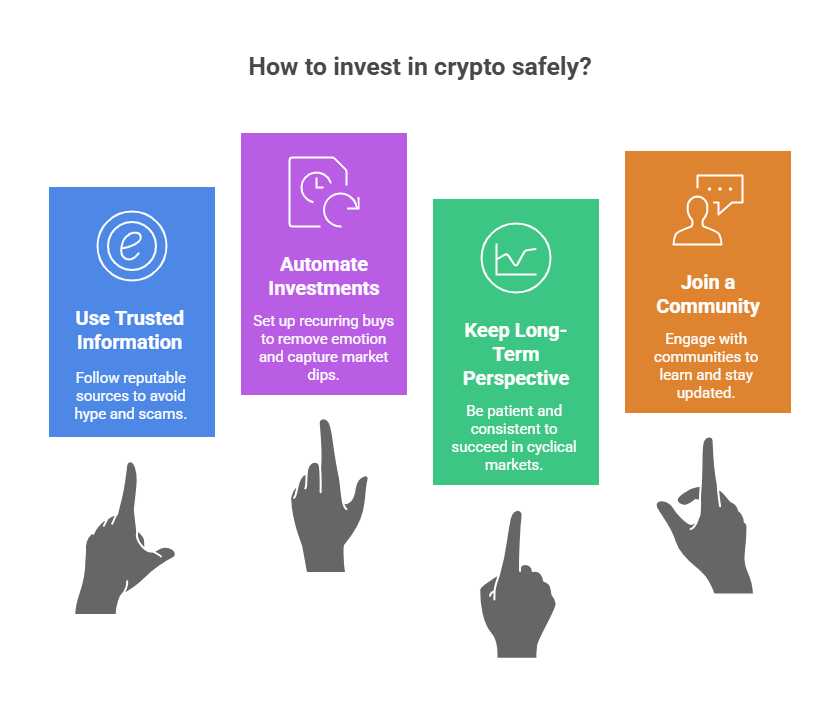
1. Use Trusted Information Sources
Follow established voices in the crypto space. Reputable resources and influencers provide balanced perspectives rather than hype-driven content.
2. Automate Your Investments
Set up recurring buys through your exchange. This removes emotion from investing and takes advantage of market dips automatically.
3. Keep a Long-Term Perspective
Crypto markets are cyclical. Bull runs and corrections are natural. Patience and consistency are key to building lasting wealth.
4. Join a Community
Join online crypto communities, Reddit groups, or Discord channels focused on education. Engaging with others helps you stay informed and avoid scams.
Frequently Asked Questions
1) Can I start investing with just $50?
Yes. Many exchanges allow micro-investments starting at $10–$50. Starting small helps you learn how trading and wallets work before committing larger sums.
2) Is cryptocurrency safe?
Crypto itself is secure thanks to blockchain technology. However, how you store and manage your assets determines your safety. Use trusted exchanges, enable 2FA, and store funds in hardware wallets.
3)Should I invest in multiple coins?
Yes. Diversifying across several coins reduces the risk of a single project failure affecting your entire portfolio. Stick to a balanced mix of established and emerging assets.
4) Do I pay taxes on crypto?
In most countries, yes. Cryptocurrency profits are considered taxable events. Keep records of all transactions to report accurately.
5) What’s the best strategy for long-term success?
Adopt a disciplined approach invest regularly, avoid emotional decisions, and hold quality assets for the long run. Combine this with good security habits and continuous learning for optimal results.
Takeaways
Cryptocurrency investing can be both exciting and rewarding, but it requires preparation, patience, and responsibility. By understanding the basics, choosing reliable platforms like [affiliate:InvestingPlatform], and practicing risk management, beginners can confidently enter the crypto market without feeling overwhelmed.
Start small, diversify wisely, and focus on learning not luck. Over time, your experience and discipline will compound just like your investments. As you grow more comfortable, consider exploring advanced opportunities like staking, DeFi, or blockchain ETFs.
The future of finance is digital. With the right mindset and tools, you can be part of it safely, smartly, and profitably.