
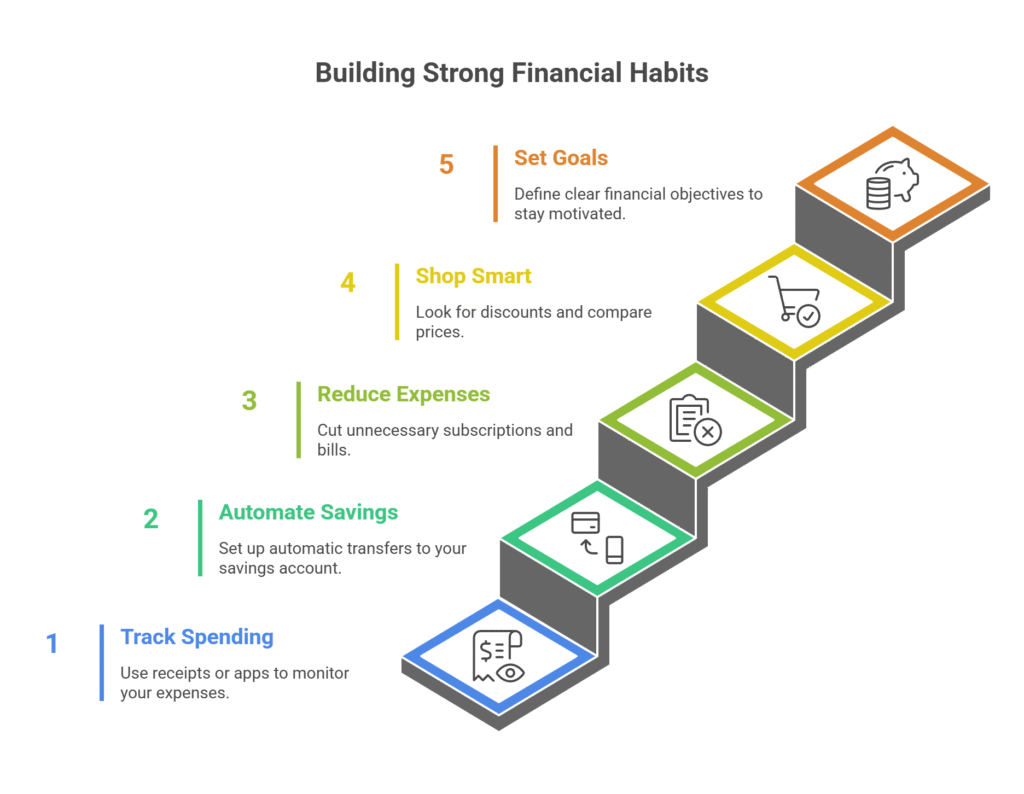
Saving money may seem challenging at first, but with small, consistent steps, anyone can create solid financial habits that last a lifetime. Whether you are a beginner or looking to refine your approach, these five strategies will help you save money without drastically altering your lifestyle. By following actionable tips, using practical tools, and setting clear goals, you can increase your savings, reduce financial stress, and gain control over your financial future.
1. Track Your Spending
The first step in building a successful savings plan is understanding where your money goes. Without tracking your spending, it’s difficult to identify leaks in your budget and opportunities to save. Surprisingly, many people spend hundreds each month on small, unnoticed expenses that can be redirected to savings.
Why Tracking Matters
Tracking spending provides insight into your financial habits. You may discover that a daily coffee habit, frequent dining out, or multiple streaming subscriptions are silently draining your budget. By quantifying your expenses, you gain awareness, which is the first step toward intentional financial decisions.
Tools to Track Spending
- Budgeting apps like [affiliate:BudgetApp] to categorize expenses automatically.
- Simple spreadsheets to manually log spending and monitor trends.
- Bank alerts and monthly statements to review transactions in detail.
Tips for Beginners
- Start by recording every transaction for a month to identify patterns.
- Separate essential from non-essential spending to see where cuts can be made.
- Use visual charts or graphs ([IMAGE: chart showing monthly expense categories]) to quickly identify high-cost areas.
Mini-Case Study: Sarah tracked her monthly expenses for three months and realized she was spending $120 per month on unused subscriptions. Canceling them and redirecting that money into her savings account added $1,440 to her yearly savings without changing her daily habits.
https://investwisetoday.com/mastering-your-monthly-budget/
2. Automate Your Savings
One of the most effective ways to consistently save money is to automate the process. Automation removes the reliance on willpower and makes saving a default behavior. Even small, regular contributions grow significantly over time due to the power of compounding.
Benefits of Automation
- Consistency: Automatic transfers ensure you save every month without thinking about it.
- Discipline: Reduces the temptation to spend extra funds before saving.
- Growth: Early and consistent saving leverages compound interest for long-term growth.
Automation Ideas
- Set up automatic transfers of 10% of each paycheck to a high-yield savings account.
- Use round-up apps that save spare change from everyday purchases.
- Gradually increase the savings percentage annually as your income grows.
Example: Mike started saving $50 per month automatically at age 25. By 35, he increased it to $100. By age 60, these consistent savings plus interest earned him over $120,000, illustrating how automation and incremental increases create wealth over time.
3. Reduce Recurring Expenses
Recurring expenses such as subscriptions, utilities, and insurance premiums can quietly drain your budget. Regularly reviewing and adjusting these costs is a simple way to free up money without impacting your lifestyle drastically.
Identify Hidden Costs
Monthly subscriptions often go unnoticed but add up quickly. Services like streaming platforms, gym memberships, and premium apps are convenient but may not be fully utilized. An annual audit of recurring expenses can reveal hundreds or even thousands of dollars that could be redirected to savings.
Quick Wins to Reduce Expenses
- Cancel unused streaming services or switch to a more affordable plan.
- Evaluate your mobile or internet plan and consider switching to cheaper alternatives.
- Negotiate bills such as insurance, utilities, or cable by leveraging loyalty or competitor offers.
- Review banking fees and consider switching to a fee-free checking account.
Mini-Case Study: Lisa reviewed her recurring expenses and canceled three streaming services and downgraded her internet plan. She freed up $85 per month, which she redirected to her emergency fund. Within a year, she had an additional $1,020 saved effortlessly.
4. Shop Smart
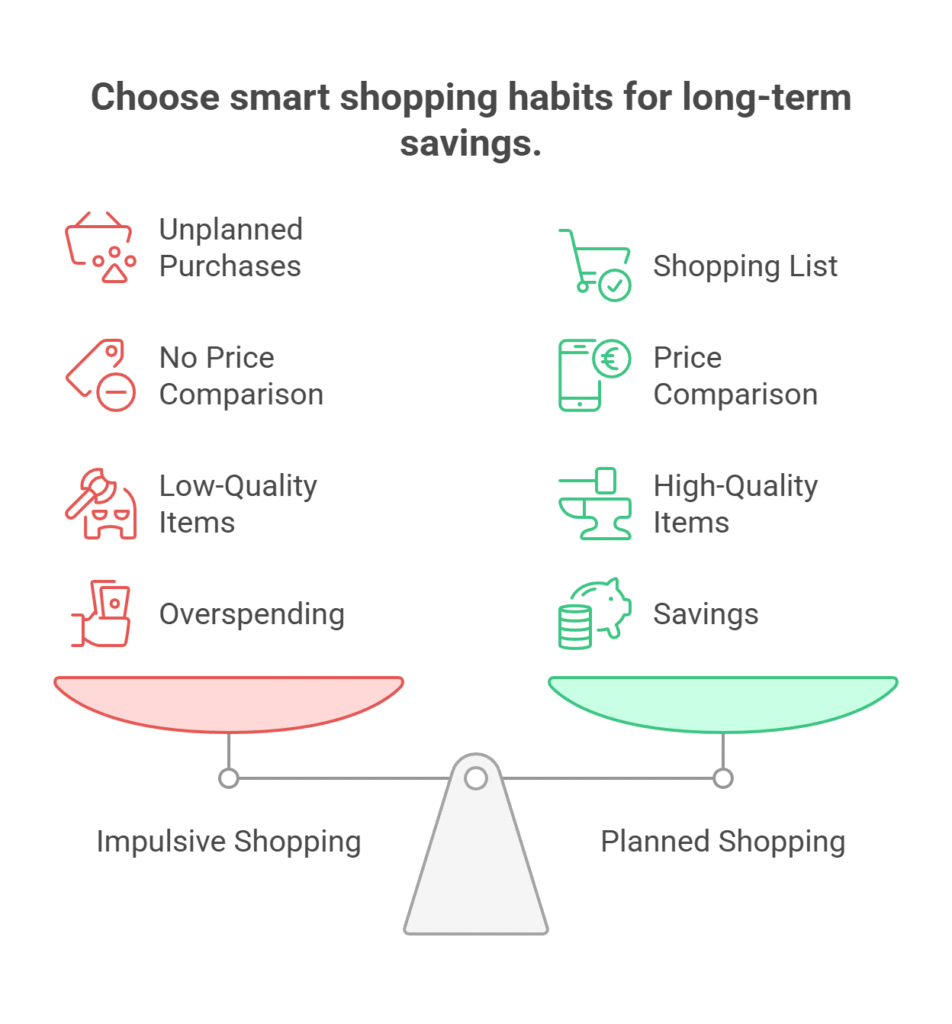
Mindful shopping is essential for saving money. Impulsive purchases or poor planning can negate other savings efforts. By shopping strategically, comparing prices, and prioritizing quality, you can maximize your spending efficiency.
Strategies for Smart Shopping
- Always create and stick to a shopping list to avoid unnecessary purchases.
- Compare prices online and offline to ensure the best deal.
- Use coupons, cashback apps, and discount platforms to get money back on essential purchases.
- Invest in high-quality items that last longer, even if upfront costs are higher.
- Wait for sales events like Black Friday or seasonal discounts for big-ticket items.
Mini-Case Study: Tom switched to comparison shopping and coupon apps. By spending 20% less on groceries and essentials, he saved $250 monthly. Annually, this added $3,000 to his savings account, demonstrating the cumulative impact of smart shopping.
5. Set Clear Savings Goals
Having clearly defined savings goals makes the process more motivating and structured. Goals provide a roadmap and a sense of achievement as you make progress.
How to Set Effective Goals
- Identify your priorities: emergency fund, vacation, large purchases, or investments.
- Quantify each goal: how much money is needed and by when.
- Break goals into monthly or weekly contributions to make them manageable.
- Track progress using apps, spreadsheets, or visual charts.
Example Goals
- Emergency fund: $1,000 in 6 months → $167/month
- Vacation fund: $2,400 in 12 months → $200/month
- New gadget: $1,200 in 8 months → $150/month
Case Study: Emma created a vacation savings plan of $2,400 in 12 months by automating $200 monthly transfers. She achieved her goal without financial stress, demonstrating how structured goals can improve saving habits.
Additional Tips to Boost Monthly Savings
Use Cashback and Reward Programs
Maximize rewards on everyday spending through credit cards ([affiliate:BestCreditCard]) or cashback apps. These small returns accumulate over time and can supplement your savings.
Reduce Energy Costs
- Switch to energy-efficient appliances.
- Unplug devices when not in use.
- Lower thermostat settings slightly in winter and summer.
Meal Planning and Cooking at Home
Plan meals in advance to avoid expensive takeout. Bulk cooking, grocery lists, and minimizing food waste can save hundreds per month. https://www.budgetbytes.com/meal-prep/
DIY and Reuse
Opt for do-it-yourself solutions, repairs, or repurposing items before purchasing new. Small creative solutions reduce spending and encourage mindful consumption.
Common Money-Saving Mistakes
- Not tracking spending regularly.
- Failing to automate savings, leading to inconsistent contributions.
- Ignoring small recurring costs that accumulate over time.
- Shopping impulsively without planning or price comparison.
- Setting unrealistic goals that cause discouragement.
Frequently Asked Questions
1) How much shouked a beginner save each month?
Even starting with $50–$100 per month is effective. Gradually increase contributions as you grow comfortable with your budget and financial habits.
2) Can I save money on a low income?
Yes! Even modest adjustments, like reducing small recurring expenses or using cashback programs, can free up money to save. Prioritize essential spending and automate small contributions.
3) Should I focus on saving or paying off debt?
Both are important. High-interest debt should be prioritized, but simultaneously building a small emergency fund ensures you can handle unexpected expenses without additional debt.
4) How can I stick to my savings plan?
Automate contributions, set realistic goals, and regularly track progress. Celebrate milestones and use visual trackers or apps to maintain motivation.
5) Are budgeting apps worth it?
Yes. They simplify tracking, categorize spending, and provide insights into where you can save.
Takeaways
Saving money every month doesn’t require radical lifestyle changes. By tracking spending, automating savings, reducing recurring costs, shopping smart, and setting clear goals, anyone can build strong financial habits. Over time, these small, consistent actions accumulate into significant wealth and financial security.
Actionable Tip: Choose one strategy from this guide today—track your spending, set up automated transfers, or cut one recurring expense—and start building momentum toward your financial goals.